
Most PMs already optimise their calendars. Gantt charts, timeboxing, color-coded calendars. Yet estimates still slip, sprint reviews still miss things, and by 3 PM even a seasoned PM can misread a risk register or wave through a bad estimate. The bottleneck isn’t hours. It’s energy. The cost is real: rework, delayed releases, burnout. Energy-blocking flips the problem by scheduling around your biology, your ultradian cycles and chronotype, not just your calendar.

Key takeaways
- Time-blocking schedules hours; energy-blocking schedules cognitive capacity, which is the real constraint on knowledge work.
- The brain runs on roughly 90-minute ultradian cycles: focus quality declines after 90 to 110 minutes, and a 20-minute genuine break restores it.
- Your chronotype (lion, bear, wolf, dolphin) sets your peak productivity window. Fighting it produces “social jetlag” and measurable errors.
- Match the task to the energy state: deep work at your peak, then meetings, email, and admin in the troughs.
- Recovery isn’t wasted time. The brain’s default mode network consolidates and incubates during true breaks.
- Run the 14-day experiment below: log energy (1 to 5) every 90 minutes, then adjust one block per day.
Energy management for project managers: why time management is not enough
Most PMs already practice time-blocking: assign a task to an hour, trust the hour to deliver. It fails quietly because hours aren’t the unit your brain bills in. Cognitive capacity is. Two 60-minute blocks are only equivalent if the brain running them is in the same state.
The 9-to-5 template isn’t neutral either. Henry Ford standardised the eight-hour day in 1926 because it suited machines: a stamping press at 2 PM operates identically to a stamping press at 10 AM. Knowledge work doesn’t behave that way. The brain is the most metabolically expensive organ in the body, and it fatigues in waves rather than along a flat line.
Research on elite performers confirms the pattern. Anders Ericsson’s studies of deliberate practice found that top violinists, chess players, and athletes capped intense focus at roughly 90-minute sessions separated by structured rest, and beyond that, performance degraded sharply (Ericsson et al., 1993). If seasoned specialists across those fields can’t sustain quality past 90 minutes, a PM juggling five workstreams has no chance.
That doesn’t mean throwing out the calendar. Time management techniques still matter: they just can’t see the second layer. The calendar needs a brain-state overlay that runs on top of it.
It also changes capacity planning. A sprint budgeted for “40 hours” of estimation work ignores that perhaps 12 to 15 of those hours are peak-quality cognition. Ambition has to fit the actual energy budget. Plan against realistic capacity, not ambition, or the plan is fiction before kickoff.
| Time-blocking | Energy-blocking | |
|---|---|---|
| Unit of planning | Hours | Cognitive states |
| Core assumption | All hours are equal | Focus quality rises and falls |
| Best for | Meetings, deadlines, coordination | Estimation, analysis, reviews |
| Blind spot | Treats 3 PM like 9 AM | Requires a two-week self-audit |
The 90-minute cycle: the science of ultradian rhythm productivity
In the 1950s, sleep researcher Nathaniel Kleitman discovered that the brain doesn’t sleep in one continuous state. It cycles through lighter and deeper stages in roughly 90-minute intervals. He then spent decades showing that the same rhythm keeps running while you’re awake. He called it the Basic Rest-Activity Cycle (BRAC) (Kleitman, 1963).
The two phases of the cycle
During waking hours, each cycle has two phases:
- High phase (about 90 minutes): Cortical arousal rises. The prefrontal cortex runs at peak efficiency, with full access to working memory, logical reasoning, and sustained attention.
- Low phase (about 20 minutes): Arousal drops. The brain shifts into diffuse, unfocused processing through the default mode network, the mode associated with mind-wandering and creative insight.
Later researchers extended the model to workplace performance. P. Naitoh documented ultradian rhythms in sustained task performance through the 1970s and 1980s, and Ernest Rossi popularised the idea that structured 90-minute focus cycles with real breaks beat pushing through fatigue.
One caveat matters for planning: the 90-minute figure is a population mean. Individual cycles run anywhere from 75 to 120 minutes, so your personal number is something you discover, not something you set.
This is the foundation of ultradian rhythm productivity: stop treating focus as an unlimited resource and start treating it as a series of sprints with scheduled recovery.
Chronotypes: find your peak productivity time of day
Your chronotype, whether you’re a morning person or a night owl, isn’t a preference. It’s hardware. The suprachiasmatic nucleus, a grain-of-rice-sized cluster of about 20,000 neurons in the hypothalamus, runs a molecular clock built from proteins (PER, CRY, CLOCK, BMAL1). A faster clock makes you an early type. A slower clock makes you a late one. Sleep researcher Peretz Lavie helped make these differences measurable, and the Morningness-Eveningness Questionnaire turned chronotype into something you can actually score (Lavie, 1982).
The four-animal model popularised by sleep researcher Michael Breus is a practical shorthand:
| Chronotype | Typical energy peak | Schedule deep work | Give the trough to admin |
|---|---|---|---|
| Lion | Morning (8 to 11 AM) | 8:00 to 10:30 AM | Mid-afternoon |
| Bear | Late morning (10 AM to 12 PM) | 9:30 AM to 12:00 PM | 2 to 4 PM |
| Wolf | Evening (5 to 9 PM) | 5:00 to 8:00 PM | Mornings |
| Dolphin | Mid-morning, light sleeper | 10:00 AM to 12:00 PM | Early morning |
These windows are starting points. The 14-day audit below gives you your real numbers. Chronotype also shifts: it skews later in adolescence and drifts earlier after age 40. For the underlying science, the Wikipedia chronotype entry is a decent map of the territory.
Social jetlag: the hidden tax on your estimates
When your biological clock and your social schedule disagree, researchers call it social jetlag. A team at LMU Munich estimates it affects over 80% of the working population. People doing analytical work in their circadian troughs make more errors, take longer, and report more mental fatigue.
They’re not lazy. Their brains are in a different biological mode.
Picture Mara, a bear-type PM who wakes at 6:30. Her cortisol awakening response peaks about 60 minutes after waking, priming the prefrontal cortex for complex operations. So she moves estimation reviews and risk analysis into the 9:30 AM to 12:00 PM block and defers status reports to the 2 PM trough. Same tasks, same hours. Different biology, different outcomes.
When to do deep work: matching tasks to energy states
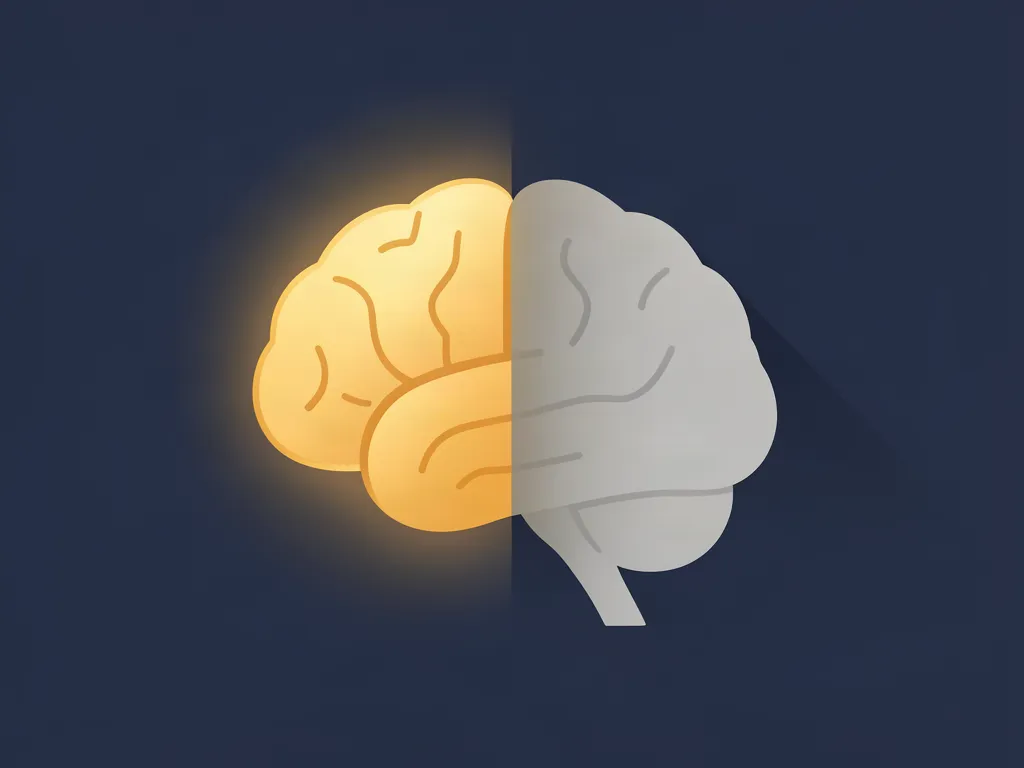
The question “when to do deep work” has one honest answer: during your peak window, whatever the clock says. Your peak window for project work is task-dependent in value, not in timing. High-stakes cognitive work belongs in your biological high phase, every time.
A simple mapping:
- Peak window: estimation, risk registers, architecture decisions, sprint retrospectives, difficult stakeholder conversations
- Mid energy: code reviews, triage, one-on-ones, planning poker
- Trough: status updates, expense reports, inbox, timesheets, file cleanup
Consider a team lead who used to scatter admin across the day in reactive scraps. They now batch status updates, expense reports, and approvals into a single 60-minute afternoon window, deliberately placed in their trough, when analytical horsepower isn’t needed. They pair it with remote communication tools that cut status-meeting overhead. The result: mornings stay protected for the work only they can do.
There’s a second benefit to peak-window deep work: completion momentum. Finishing a hard task in a strong state feeds the psychology of task completion, and closed loops reduce cognitive drag for the rest of the day.
Recovery is part of the job: how to take a real 20-minute break
The low phase of each cycle isn’t downtime your body is failing at. It’s a different mode of thinking. Neuroscientist Marcus Raichle identified the default mode network (DMN), the system active during unfocused rest that handles memory consolidation and incubation. It’s why solutions arrive in the shower: the brain keeps working on a problem after conscious attention stops.
That only holds for genuine breaks. Scrolling LinkedIn is not a break. It keeps the attention system loaded. Walking, stretching, staring out a window, or brief mindful work practices actually let the DMN engage.
Then there’s the caffeine trap. Most people read the ultradian dip as a signal to grab coffee and push through. Caffeine works by chemically overriding the adenosine signals that accompany the low phase. The cost: each subsequent high phase gets shorter and weaker, and by 3 PM cognitive reserves are spent. A better chronotype work schedule rides the wave instead of fighting it.
A freelance developer runs it cleanly: one 90-minute focus block on implementation, then a 20-minute active recovery, a walk outside, some stretching, no screens. Then the next block. He tracks it like a billable task, because for a solo operator, it is the most valuable work on the sheet. DeskTime’s analysis of its most productive users found a similar rhythm: roughly 52 minutes of focus followed by 17 minutes of break. The discipline here is energy, not time management, and if break guilt keeps you at your desk, that’s often productivity anxiety talking, not a scheduling problem.
The 14-day energy-blocking experiment
You don’t need a lab to find your cycles. You need two weeks and a notebook.
Week 1: audit (days 1 to 7)
- Set a repeating 90-minute timer during work hours.
- When it fires, write one line: time, energy rating (1 to 5), what you were doing, and context (coffee, meeting-heavy morning, post-lunch, that kind of thing).
- Note your wake time each day. Your peak windows are anchored to it.
- Change nothing yet. Observation data only works if it’s honest.
Week 2: restructure (days 8 to 14)
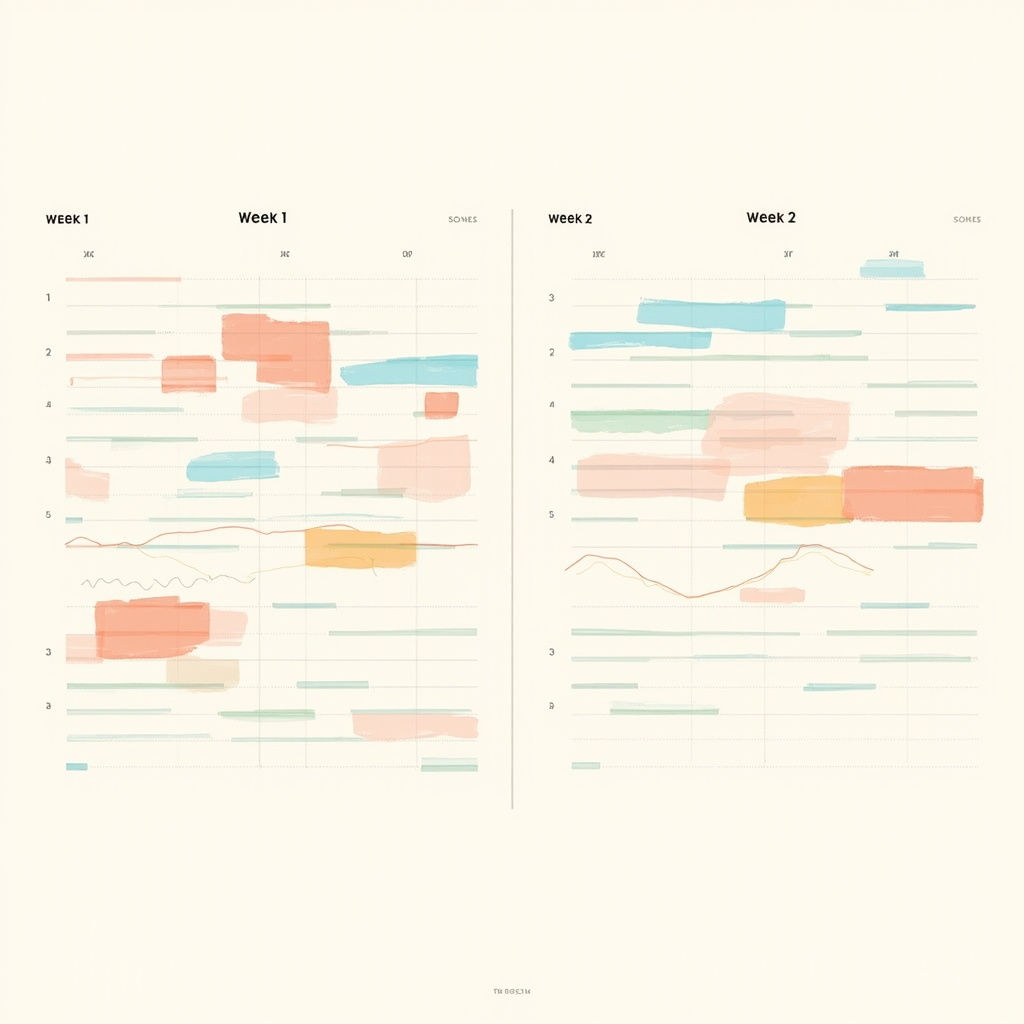
- Identify your two reliable peak windows and one reliable trough from the log.
- Move one block per day, your hardest cognitive task, into your best window. One block, not the whole calendar.
- Insert a genuine 20-minute break after each ~90-minute focus block.
- Batch admin into the trough window.
Two notes for specific readers. If your cycles feel irregular or your attention profile doesn’t match the standard pattern, which is common with ADHD and other neurodivergent workers, these neurodiverse task management strategies pair well with the audit. Your 75 to 120 minute cycle may need its own calibration.
Energy-blocking tips you can apply this week
- Anchor your day to wake time, not clock time. Cortisol peaks about 60 minutes after waking, and your first peak window usually follows.
- Guard one 90-minute block per day as non-negotiable deep work. One block is enough to change a project’s trajectory.
- Schedule estimation and review sessions in your peak window, never in your trough. For lions and bears, that means before noon. For wolves, late afternoon. Error rates in troughs are a documented cost.
- Cap meetings at the top of a cycle, so the low phase absorbs the wrap-up, not the analysis.
- Keep breaks screen-free. The DMN only engages when the attention system idles.
- Time caffeine for the start of a high phase, not as a rescue for a low phase.
- Re-audit monthly. Chronotypes shift with seasons, age, and sleep debt, and your schedule should drift with them.
Common mistakes (and what they cost)
- Using caffeine to override every dip. It borrows energy from the next cycle at interest, ending in the 3 PM crash.
- Copying someone else’s schedule. A lion’s 7 AM deep block is a wolf’s trough. Build from your own log.
- Scheduling high-stakes cognition in troughs. Estimation sessions, risk reviews, and contract reviews held during a circadian trough produce measurably more errors.
- Counting scrolling as recovery. Feeds keep the attention system loaded; the low phase never completes, and the next high phase starts compromised.
- Assuming the 90-minute figure is universal. Cycles run 75 to 120 minutes. Forcing someone else’s rhythm produces the same misalignment you started with.
- Rebuilding the whole calendar at once. Change one block per day. Radical overhauls collapse by Thursday.
FAQ
What is energy management for project managers, in plain terms?
It’s scheduling tasks by your cognitive state instead of just by the clock. You put analytical work (estimation, risk analysis, reviews) in your biological peak windows and batch admin into troughs, using your 90-minute ultradian cycles as the rhythm.
Do 90-minute cycles really apply to everyone?
The 90-minute figure is a population average; individual cycles run from 75 to 120 minutes. The structure holds for nearly everyone, but your personal cycle length is something the 14-day audit reveals.
What if my calendar is full of meetings set by other people?
Start where you have control: protect even one peak block per day and push your own admin into your trough. Over time, you can negotiate recurring meetings toward your mid-energy windows. You’ll make a better case with two weeks of logged data.
How long before I see a difference?
Most people spot clear peak and trough patterns within the first week of logging. Measurable changes, like fewer review errors and less 3 PM reliance on caffeine, typically show up across the second week as blocks move into place.
Schedule energy first, then hours
Your task tool manages tasks. Your calendar manages hours. Neither manages the thing that actually determines whether the estimate holds and the release ships: your energy. Energy-blocking is a plan built on 90-minute cycles, a chronotype-respecting schedule, and recovery that gets treated as part of the work, not a reward for finishing it.
Here’s the soft start: tomorrow, begin a simple energy diary. Rate yourself 1 to 5 every 90 minutes for one week. Then spend the following fortnight adjusting one block per day, moving your hardest thinking into your strongest window and your admin into your trough. No new tools required, no purchases, no system to adopt.
Just fourteen days of working with your biology instead of against it. The changes show up in the second week: fewer errors in review, less 3 PM brain fog, and the kind of momentum that makes the next sprint feel less like a grind.